Welcome To Our Company




 Send Inquiry
Underslung Cranes
Price 280000 INR/ Piece
MOQ : 1 Piece
Underslung Cranes Specification
- Trolley Travel Speed
- 2-20 m/min (Variable, adjustable as per usage)
- Slewing Angle
- Not applicable (Straight traveling type)
- Max Oil Flow of Hydraulic System
- Not applicable (Electric Operation)
- Feature
- Compact design, Smooth operation, Low headroom, Space saving, Easy maintenance
- Working Presssure
- Not applicable (Electric operated)
- Recommend Power
- 3-15 kW depending on load capacity and span
- Crane Total Weight
- Depends on span and capacity (Consult manufacturer for details)
- Crane Traveling Speed
- 5-20 m/min (Variable as per design)
- Condition
- New
- Material
- Mild Steel / Alloy Steel structural components
- Crane Type
- Truck
- Application
- Storage Yard, Factory
- Span Length
- 3 m to 30 m (customizable)
- Loading Capacity
- 250 kg to 10,000 kg
- Lifting Time
- Depends on hoist rating; generally 1-10 m/min
- Lifting Capacity
- Up to 10 Ton (customizable as per requirement)
- Lifting Height
- 3 m to 18 m (customizable)
- Control Type
- Pendant/Push Button, Remote Control (optional)
- Limit Switch
- Yes, for hoisting and traveling
- Emergency Stop
- Provided in pendant/control panel
- Color Options
- Yellow/Blue or as per customer request
- Hoist Type
- Electric wire rope hoist / Chain hoist
- Optional Features
- Wireless radio remote, Variable Frequency Drive (VFD), Overload protection, Anti-collision devices
- Working Temperature Range
- -20C to 50C
- Design Standard
- ISM/IS 3177, IS 807
- Paint Finish
- Anti-corrosive industrial paint
- Duty Class
- Class II, III, or IV (ISI/BIS Standards)
- Electrical Supply
- Three Phase, 380/415/440V, 50 Hz (customizable)
- Installation Type
- Ceiling/roof mounted (underslung to runway beams)
Underslung Cranes Trade Information
- Minimum Order Quantity
- 1 Piece
- Payment Terms
- Cash on Delivery (COD)
- Supply Ability
- 10 Pieces Per Day
- Delivery Time
- 1 Days
- Sample Available
- Yes
- Sample Policy
- Contact us for information regarding our sample policy
- Main Export Market(s)
- Asia, South America, Africa
- Main Domestic Market
- All India
About Underslung Cranes
Underslung cranes, also known as under-hung, under-running, or suspension cranes, are a type of overhead crane designed to maximize headroom and provide unobstructed lifting in facilities with limitations. Here's a detailed breakdown of their key features and applications:Design and Functionality:
- Suspended Movement: Unlike traditional overhead cranes with a bridge supported from above, underslung cranes have their bridge and trolley assembly suspended from an elevated track beam. This track beam is typically secured to the ceiling or building's structural supports.
- Hoist and Trolley: The bridge carries a trolley that travels along its length. This trolley holds the motor-driven hoist, which includes the hook and lifting mechanism for raising and lowering loads.
- Space Optimization: The key benefit of underslung cranes is their ability to operate with minimal headroom required. This allows for maximum use of vertical space within a facility.
- Low-headroom Buildings: Underslung cranes are ideal for facilities with limited headroom, such as warehouses with existing structures or buildings with low ceilings.
- Complex Layouts: They are well-suited for buildings with complex layouts where installing columns for a traditional overhead crane might be impractical.
- Maximizing Floor Space: By keeping the crane bridge suspended from above, underslung cranes free up floor space, allowing for better utilization of the area beneath the crane for machinery, storage, or vehicle movement.
- Wall Clearance and Cantilever Options: Underslung cranes offer better side approach clearances compared to top-running cranes. Additionally, some models can be designed with cantilevered beams, allowing the hoist to travel beyond the runway track for increased lifting reach.
- Space Optimization: Maximizes headroom and floor space for better facility utilization.
- Versatility: Adaptable to complex building layouts and low-clearance environments.
- Unobstructed Lifting: Provides clear lifting areas without columns or bridge structures in the way.
- Easy Maintenance: The suspended design often allows for easier access to the crane bridge and components for maintenance.
- Capacity: The maximum weight the crane can safely lift.
- Span: The distance the crane bridge can travel along the runway.
- Headroom: The available clearance between the highest point of the load and the ceiling or overhead structure.
- Building Structure: The strength of the ceiling or supporting structure to handle the suspended crane weight.
- Application: The specific lifting tasks and required reach within the facility.
Space-Saving Design
With its underslung configuration, this crane mounts directly to existing ceiling or roof structures, minimizing the need for floor space and maximizing overhead clearance. Its compact construction provides smooth operation, ideal for environments with restricted room or low headroom. The variable travel and trolley speeds ensure precise positioning and adaptability for various industrial applications.
Superior Safety and Control
Safety is prioritized through multiple integrated features including limit switches, emergency stop functions, and overload protection options. The system can be operated via pendant controls, push buttons, or an optional wireless remote, allowing flexibility and enhanced operator safety. Variable frequency drives (VFD) provide further control, protecting both the machinery and materials.
Customizable Lifting Solutions
Each crane is tailored to match specific operational requirements - from spanning distances of 3 to 30 meters, lifting capacities up to 10 tons, to paint color and hoist types. Whether handling small loads or heavy materials, the system's modular design and multiple duty classes (Class II, III, or IV) support reliable, efficient operations in diverse environments.
FAQ's of Underslung Cranes:
Q: How is the underslung crane installed, and where is it typically used?
A: The underslung crane is installed by suspending it from ceiling or roof structures, specifically to runway beams. This design is ideal for industrial environments like factories, storage yards, and manufacturing plants where floor space needs to be conserved and overhead lifting is crucial.Q: What electrical supply is required to operate the crane?
A: The system operates on three-phase electrical supply, compatible with 380V, 415V, or 440V at 50 Hz. The power requirement ranges from 3 to 15 kW, depending on load capacity and span. The supply can be customized to align with site-specific electrical standards.Q: When should optional features such as remote control or VFD be considered?
A: Optional features like wireless radio remote control, Variable Frequency Drive (VFD), and anti-collision devices should be considered when enhanced safety, operational flexibility, or precise speed control are necessary for your application. These features are especially beneficial in busy or hazardous environments.Q: What types of hoists are compatible with this crane?
A: This crane supports both electric wire rope hoists and electric chain hoists. The choice depends on the required lifting speed, height, and load capacity, as well as site-specific operational preferences.Q: How does the crane ensure safety during operation?
A: Safety is ensured through multiple mechanisms including mechanical limit switches for hoisting and traveling, emergency stop functions in the control panel or pendant, and the option for overload protection and anti-collision devices. All these features comply with recognized ISI/BIS safety standards.Q: Where can I customize specifications like color, span, or lifting height?
A: All key specifications-such as finish color, span length (3m to 30m), lifting capacity (up to 10 tons), and lifting height (3m to 18m)-can be customized at the time of order. Simply consult with the manufacturer or supplier to tailor the crane to your operational needs.Q: What are the maintenance requirements and benefits of using this underslung crane?
A: The crane's robust design with anti-corrosive paint and high-quality steel construction requires only routine maintenance, such as regular inspections and lubrication. Its space-saving, compact build and easy-to-service components ensure long-term reliability and reduced downtime, maximizing productivity.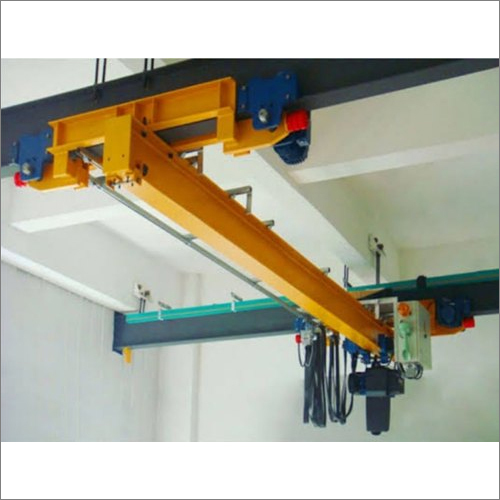
Tell us about your requirement

Price:
Quantity
Select Unit
- 50
- 100
- 200
- 250
- 500
- 1000+
Additional detail
Mobile number
Email

More Products in Girder Crane Category
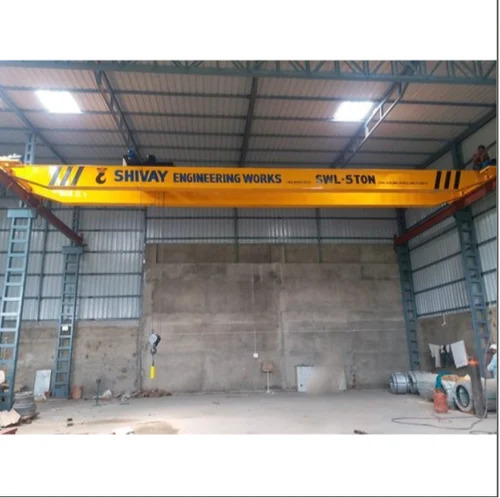
Overhead EOT Crane
Price 250000 INR / Unit
Minimum Order Quantity : 1 Unit
Condition : New
Usage : Industrial
Application : Factory
Size : Standard
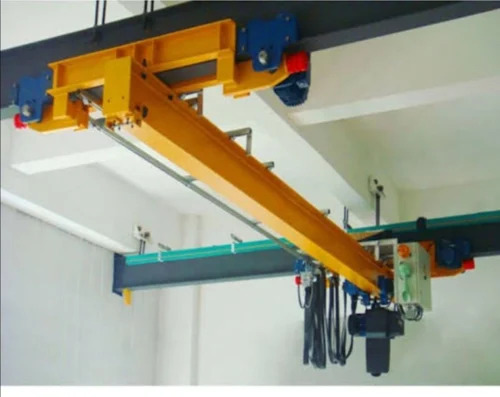
Shivay Underslung Cranes
Price 280000 INR / Unit
Minimum Order Quantity : 1 Unit
Condition : New
Usage : Industrial
Application : Factory
Size : Standard

SHIVAY ENGINEERING WORKS
GST : 24AEJFS8042M1ZK
GST : 24AEJFS8042M1ZK

- 21, Nandanvan Industrial Park 1, Bakrol-Dhamatvan Road, Bakrol, Ahmedabad - 382430, Gujarat, India
- Phone : 08045477049
- Mr Bharat (Proprietor)
- Mobile : 08045477049
- Send Inquiry
 Send Inquiry
 Send Inquiry
 Send SMS
SHIVAY ENGINEERING WORKS
All Rights Reserved.(Terms of Use)
Developed and Managed by Infocom Network Private Limited.
Developed and Managed by Infocom Network Private Limited.

